7 min read • 1,539 words
Best Free Database Tools for Developers in 2026
As the landscape of software development continues to evolve, the importance of choosing the right database tools cannot be overstated. In 2026, developers are presented with a plethora of options that cater to various needs, from relational databases to NoSQL solutions. This article explores the best free database tools for developers, highlighting their unique features and benefits. Understanding these tools is crucial for optimizing application performance and ensuring efficient data management.
Readers will learn about top contenders such as PostgreSQL, known for its advanced capabilities and strong community support, and SQLite, favored for lightweight applications. Additionally, MongoDB Atlas stands out with its robust free tier for NoSQL solutions, while Firebase offers a real-time database perfect for web and mobile applications. Finally, DBeaver serves as a universal database tool that supports multiple database management systems, making it an essential resource for developers in 2026.

Top Open-Source Database Tools
As we look ahead to 2026, the landscape of open-source database tools continues to evolve, providing developers with a wealth of options to choose from. Open-source databases are not only cost-effective but also offer flexibility and customization that proprietary solutions often lack. This article explores some of the best free database tools for developers in 2026, focusing on their benefits, popular options, and community support.
One of the primary advantages of using open-source database tools is the ability to modify the source code to suit specific project needs. This level of customization allows developers to optimize performance and implement unique features. Additionally, open-source tools often come with no licensing fees, making them an attractive option for startups and individual developers.
Among the most popular open-source databases are PostgreSQL and MySQL. PostgreSQL is renowned for its advanced features, including support for complex queries and data integrity. It is ideal for applications requiring robust data handling and reliability. On the other hand, MySQL is widely used for web applications due to its speed and ease of use. Both databases have extensive documentation and active communities that provide support and resources.
- PostgreSQL: Known for its powerful features and extensibility, suitable for complex applications.
- MySQL: A fast and reliable option, particularly popular in web development.
- MariaDB: A fork of MySQL, offering enhanced performance and security features.
- SQLite: A lightweight database ideal for mobile and embedded applications.
Community support is another significant benefit of open-source databases. Developers can access forums, tutorials, and documentation, facilitating problem-solving and knowledge sharing. This collaborative environment fosters innovation and continuous improvement, ensuring that these tools remain relevant and effective for developers in 2026 and beyond.

Cloud-Based Database Solutions
In the rapidly evolving landscape of software development, cloud-based database tools have emerged as essential resources for developers. These tools offer a range of functionalities that facilitate data management, storage, and retrieval without the need for extensive on-premises infrastructure. As we look towards 2026, it is crucial to understand the advantages of these solutions, especially for developers seeking the best free database tools.
One of the primary benefits of cloud-based databases is their scalability. Developers can easily adjust their database resources according to the demands of their applications. This flexibility allows for seamless scaling during peak usage times without the need for significant upfront investments in hardware. For instance, a startup can begin with minimal resources and expand its database capabilities as its user base grows, ensuring cost-effectiveness and efficiency.
When comparing leading cloud database services, two prominent options are Firebase and MongoDB Atlas. Firebase, backed by Google, provides a real-time database that is particularly advantageous for mobile and web applications requiring instant data synchronization. On the other hand, MongoDB Atlas offers a more flexible document-oriented database that excels in handling complex queries and large datasets. Both platforms provide robust free tiers, making them attractive choices for developers in 2026.
- Firebase: Ideal for real-time applications and easy integration with other Google services.
- MongoDB Atlas: Great for applications needing complex data structures and high scalability.
Security is another critical aspect of cloud databases. Leading providers implement advanced security measures, including encryption, access controls, and regular security audits. For example, both Firebase and MongoDB Atlas offer built-in security features that help protect sensitive data from unauthorized access, ensuring compliance with industry standards.
In conclusion, as developers continue to seek the best free database tools in 2026, cloud-based solutions like Firebase and MongoDB Atlas stand out for their scalability, flexibility, and security features. Embracing these tools can significantly enhance development processes and application performance.
NoSQL vs SQL Database Tools
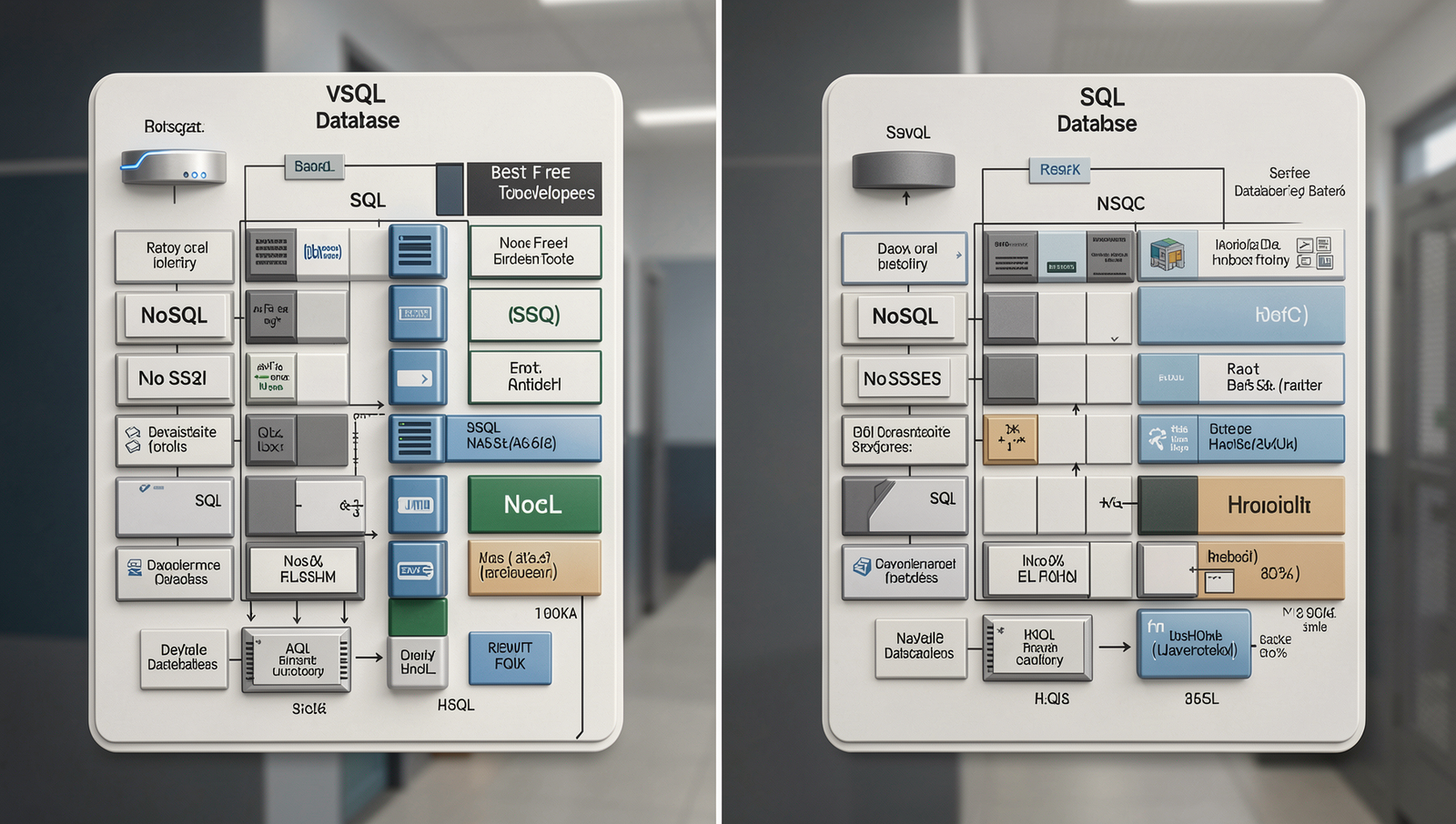
In the realm of database management, developers often face the choice between NoSQL and SQL databases. Understanding the differences between these two types of databases is crucial for selecting the best free database tools for developers in 2026. SQL databases, such as MySQL and PostgreSQL, are structured and use a predefined schema to organize data. They excel in handling complex queries and transactions, making them ideal for applications requiring ACID (Atomicity, Consistency, Isolation, Durability) compliance.
On the other hand, NoSQL databases, like Cassandra and DynamoDB, offer a more flexible schema design, allowing for the storage of unstructured or semi-structured data. This flexibility makes NoSQL databases suitable for applications that require scalability and high availability. For instance, Cassandra is often used in scenarios involving large volumes of data across multiple servers, while DynamoDB is favored for its seamless integration with AWS services and its ability to handle variable workloads.
Use cases for SQL tools include:
- Web applications that require complex queries and transactions.
- Financial systems where data integrity is paramount.
- Content management systems that rely on structured data.
Conversely, NoSQL tools are commonly used for:
- Real-time analytics and big data applications.
- Social media platforms that manage diverse data types.
- IoT applications that require rapid data ingestion and retrieval.
As we look towards 2026, trends in database technology, such as the rise of multi-model databases and serverless architectures, are shaping the way developers approach database management. These trends emphasize the need for tools that can adapt to varying data requirements and workloads, ultimately influencing the choice of database solutions in the ever-evolving tech landscape.

Emerging Database Technologies
As we move into 2026, several new database technologies are gaining traction among developers. These advancements are reshaping how data is stored, managed, and analyzed, making it essential for developers to stay informed about the best free database tools for developers in 2026. One notable trend is the increasing adoption of cloud-native databases, which offer scalability and flexibility that traditional databases often lack. These databases are designed to operate seamlessly in cloud environments, allowing developers to leverage the power of distributed computing.
Another significant development is the impact of artificial intelligence (AI) and machine learning on database management. AI-driven databases can automate routine tasks, optimize query performance, and even predict data trends. For instance, tools like Google Cloud Bigtable utilize machine learning algorithms to enhance data retrieval processes, making them faster and more efficient. This integration of AI not only streamlines operations but also empowers developers to focus on more complex tasks.
Graph databases are also emerging as a powerful alternative for managing interconnected data. Unlike traditional relational databases, graph databases use nodes, edges, and properties to represent and store data, making them particularly effective for applications such as social networks, recommendation engines, and fraud detection systems. Popular examples include Neo4j and Amazon Neptune, which allow developers to visualize and analyze relationships within data effortlessly.
Looking ahead, future trends in database technology are likely to include enhanced security features, improved data governance, and the continued rise of NoSQL databases. As the demand for real-time data processing grows, developers will need to adapt to these changes by utilizing the best free database tools for developers in 2026.
Conclusion
In 2026, the landscape of database tools continues to evolve, offering developers a wealth of options that are both powerful and free. The best free database tools for developers in 2026 not only enhance productivity but also streamline workflows, enabling teams to manage data more efficiently. From robust relational databases like PostgreSQL to flexible NoSQL solutions such as MongoDB, these tools cater to diverse project needs. Additionally, features like cloud integration, user-friendly interfaces, and strong community support make these tools accessible to developers at all skill levels.
As you explore the best free database tools for developers in 2026, consider your specific project requirements and team dynamics. Take advantage of trial versions, engage with user communities, and leverage online resources to maximize your understanding and usage of these tools. By carefully selecting the right database solution, you can significantly enhance your development process and ensure that your applications are built on a solid data foundation.
Frequently Asked Questions
What are the best free database tools for developers in 2026?
In 2026, some of the best free database tools for developers include MySQL, PostgreSQL, and SQLite. These tools offer robust features, excellent community support, and compatibility with various programming languages, making them ideal for both beginners and experienced developers.

Are there cloud-based free database tools available?
Yes, there are